
Robotics
Robots that go where people can’t, so rescuers don’t have to.
After an earthquake, a building collapse or a landslide, the first hours matter most. We build legged robots to put eyes, sensors and eventually supplies into the places rescuers can’t safely reach.
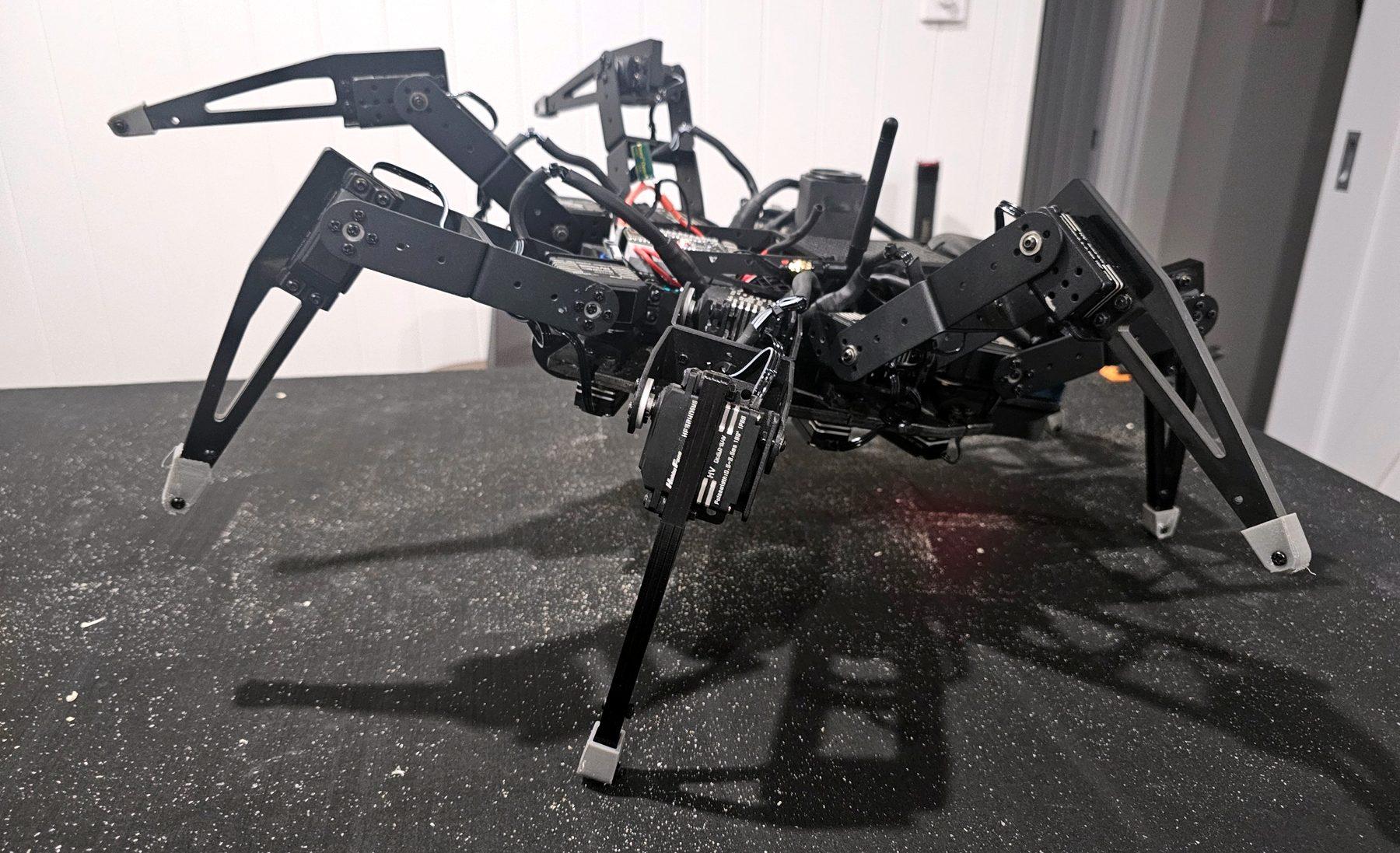
For search and rescue, emergency services, and anyone who needs to see inside places people can’t safely enter.
Why legs, not wheels
Wheels and tracks work well on roads and open ground. Disaster zones offer neither. Debris fields are broken and uneven, with gaps, steps and loose material that can stop a wheeled platform outright.
Legged robots move differently, and go where wheels and rotors can’t. Each foot picks its own contact point, so the robot can step over obstacles, keep its footing on uneven ground and spread its weight across many points of support. An eight-legged design adds redundancy: the robot always has several feet planted, which keeps it stable while carrying a load, and it can hold its position on very little power, so it can stop, wait and listen.
Designed by evolution
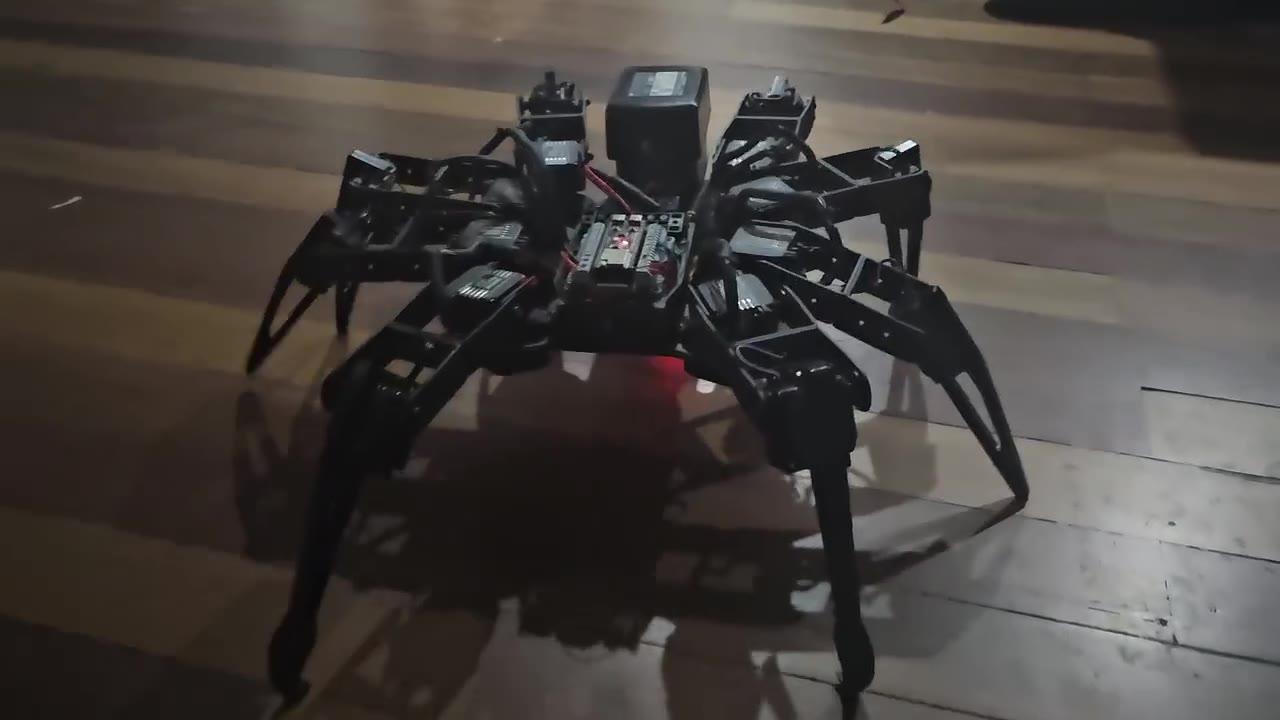
Rather than invent locomotion from scratch, we look to the most successful walkers on Earth. Arthropods — insects, spiders and their relatives — have refined their movement over more than 380 million years, and today thrive almost everywhere, from rainforest canopies and desert sand to caves, cliff faces and the gaps beneath fallen debris. Their gaits, body proportions and reflexes are field-tested solutions to the same problems our robots face.
- Carries a payload at its centre, built to hold sensors, cameras and onboard computers
- Senses what is ahead, with room for environmental sensor packages
- Climbs using a dedicated wave gait that lifts the body over obstacles
- Operates wirelessly, with live diagnostics and over-the-air software updates
Where we’re heading
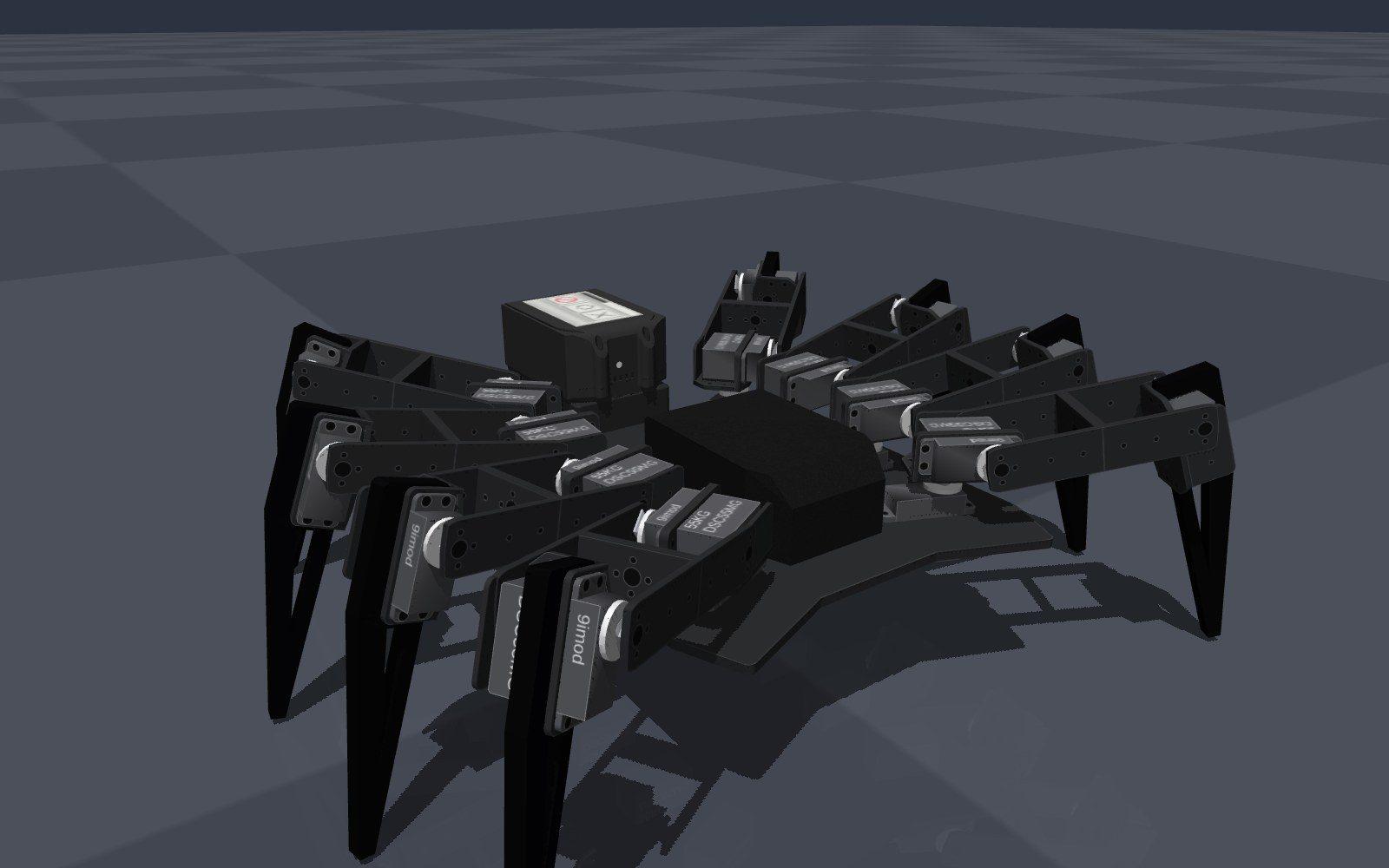
The Huntsman has completed its first prototype stage. The second generation, now in development, is built toward a robot that can enter a disaster zone, move through it on its own and send back what it finds — giving rescuers the information they need without putting more lives at risk.
- Stronger joints for heavier payloads
- Pressure-sensing feet, so the robot can feel the ground beneath it
- Body-orientation sensing, so it can keep its balance on unstable terrain
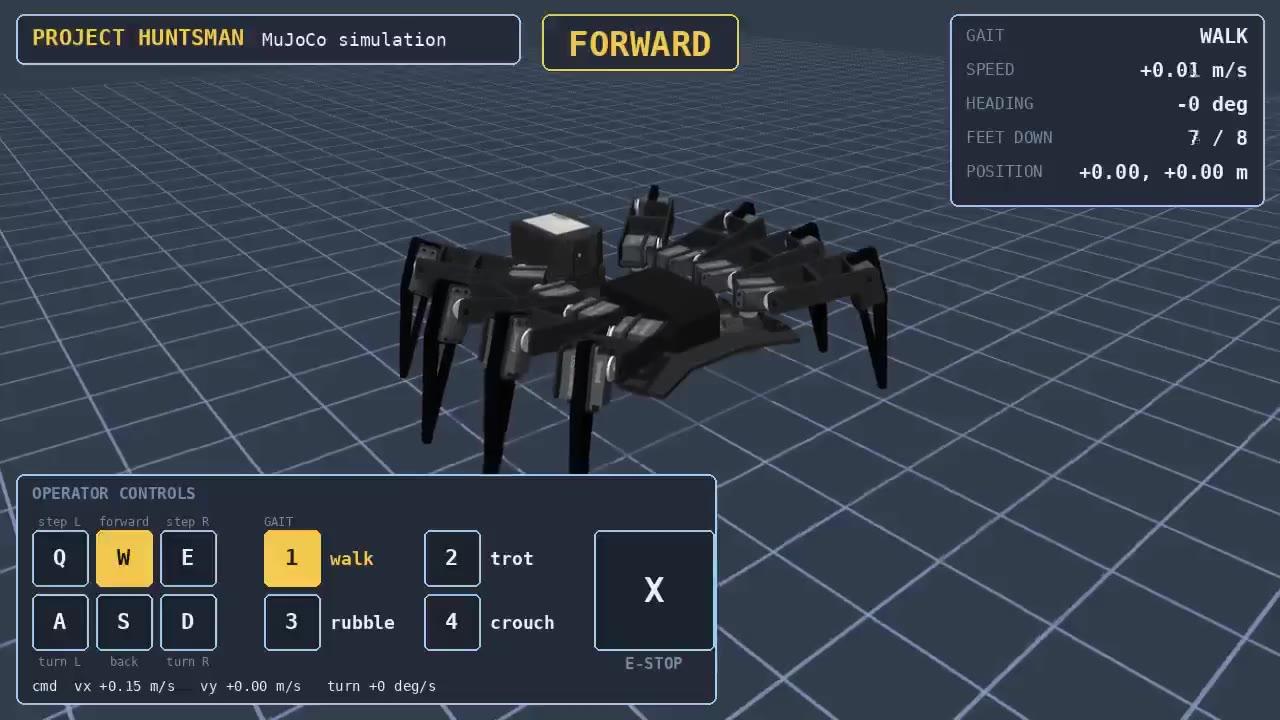
- Simulated playgrounds for machine learning, so it can choose its own path over rough ground
- An onboard mesh network to reconnect communications in a blackout
Whichever one you arrive through
- Hosted on hardware we own, in Australia, with no licence fee that grows every year
- The people who scope the work are the people who write it — there is no account manager
- Maintained and extended after launch, by the person who already knows your system
- Documentation written as we build rather than reconstructed afterwards
What it costs
Scoped per project
Robotics work is research-led. We scope it with you against what the robot has to reach and what it has to bring back.
Current work
Project Arachnid: The Huntsman, our first eight-legged prototype, stands, walks, turns, detects obstacles and climbs.