
Project Arachnid
After an earthquake, a building collapse or a landslide, the first hours matter most — and they are the hours when rescue teams face the most danger. Project Arachnid builds legged robots to go where people can’t.
Collapsed structures, unstable rubble, smoke and confined voids make many of the places survivors are trapped too dangerous for people to enter. Project Arachnid builds legged robots for these human-denied environments: terrain too dangerous, too unstable or too confined for people or conventional machines.
The aim is to put eyes, sensors and eventually supplies into the spaces between the rubble, so rescue teams can find survivors sooner and with less risk.
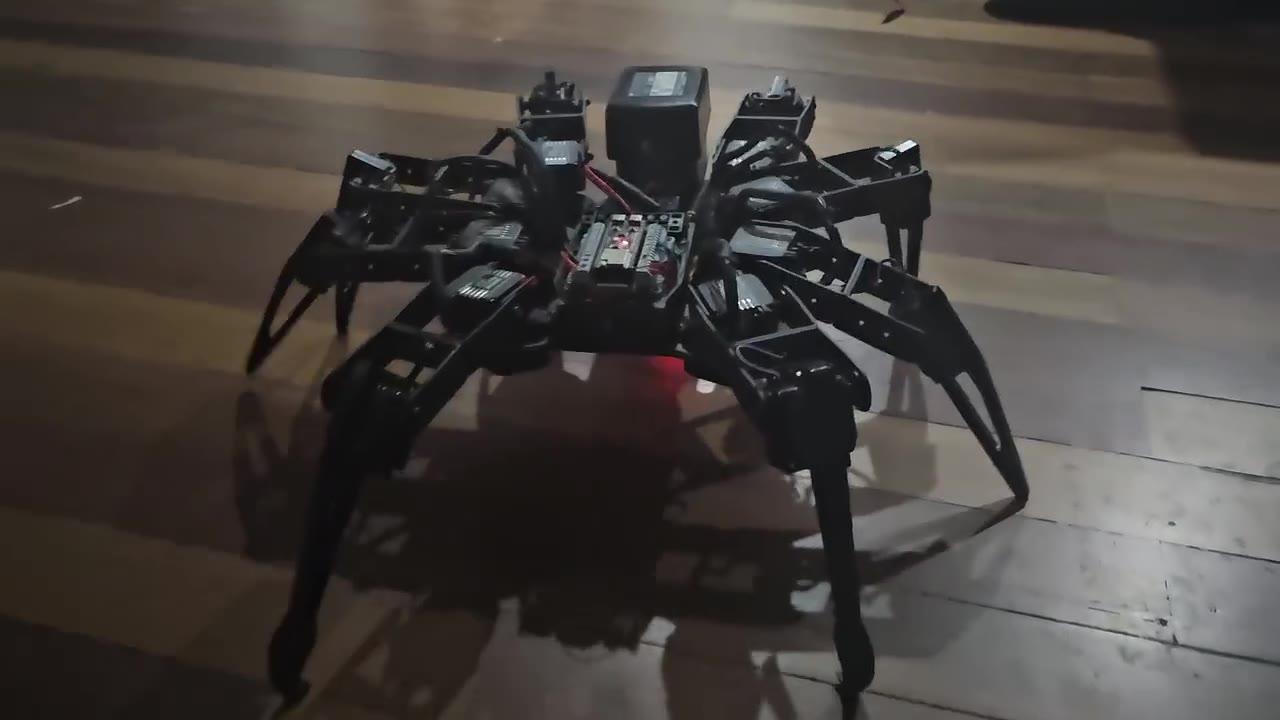
Our flagship platform, The Huntsman, takes its cues from the huntsman spider and its distant cousin the wolf spider — fast, low-slung and agile hunters. It walks on eight legs using an alternating gait drawn from arthropod locomotion, so its body stays supported at all times.
The first prototype stands, walks, turns, detects obstacles and climbs. The second generation, now in development, adds stronger joints for heavier payloads, pressure-sensing feet, body-orientation sensing, simulated training environments for machine learning, and an onboard mesh network to restore communications in a blackout.
This is robotics work. See how robotics works
- Stream
- Robotics
- Platform
- The Huntsman, eight legs
- Stage
- First prototype complete
- Next
- Second generation in development
- Client
- V Source